THE
CLIMBING LAB
Where biology meets data.
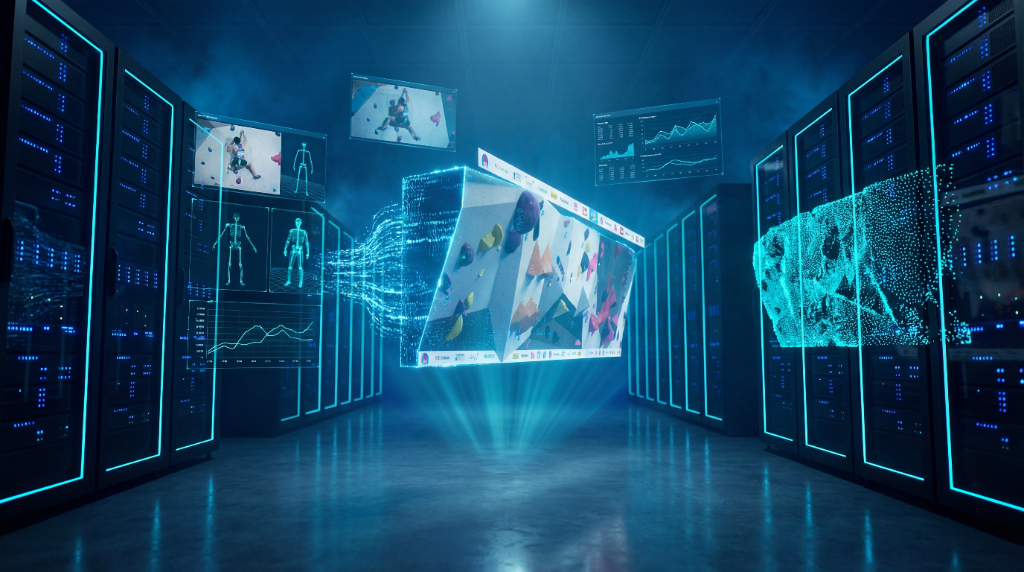
The Climbing Lab is the intelligence layer of the Send Science system — a suite of AI-driven tools that run quietly in the background of every session, building a picture of your development that no other gym can see.
Wall Tracking System
Every Angle. Every Frame. Nothing Missed.
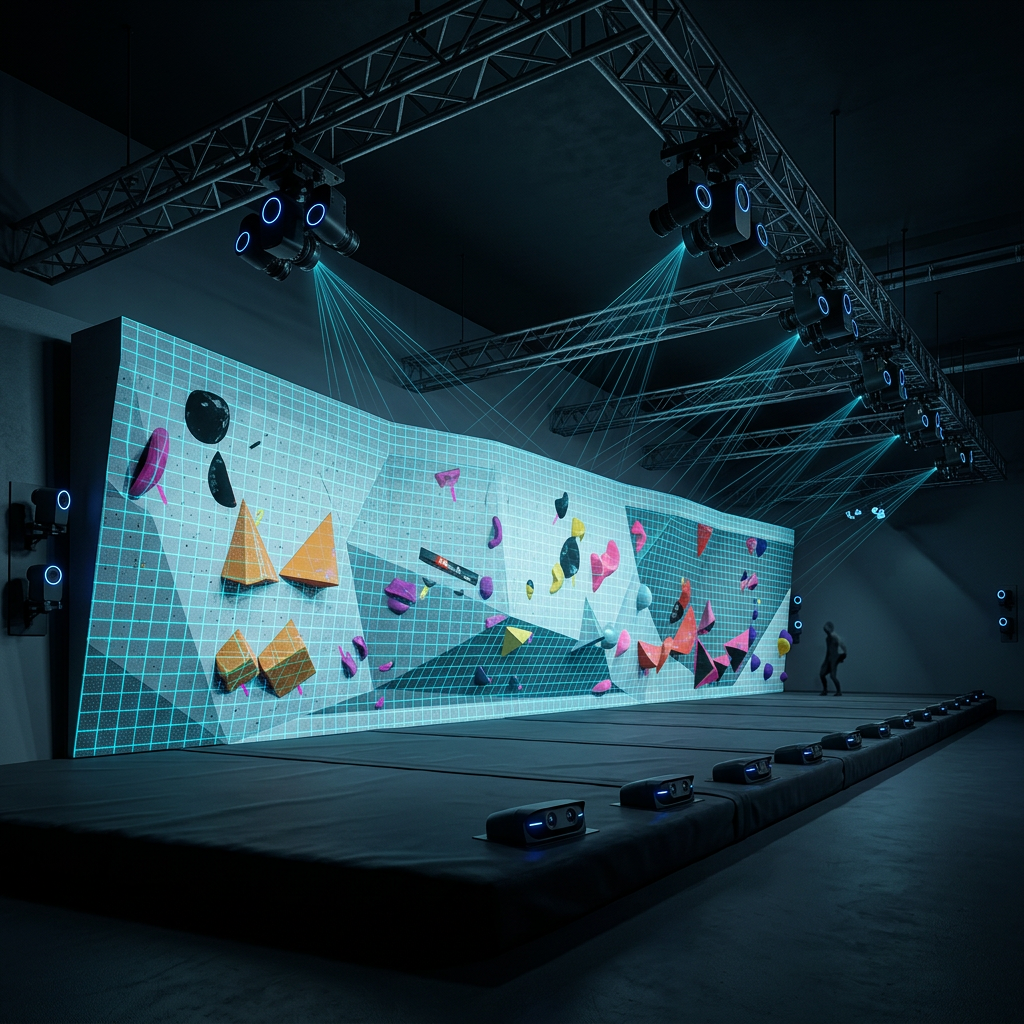
Taking a nod from casino surveillance, our multi-angle sensor network achieves full triangulation coverage of every wall surface. Overhead arrays, floor-level rigs, and side-mounted units work together to ensure no movement goes undetected — capturing every climber, every hold, every moment in real time.
Triangulated Coverage
Overhead, floor, and side-mounted sensor arrays work in concert — eliminating blind spots and capturing the full three-dimensional picture of every move.
Wall Surface Intelligence
The entire wall is scanned in continuous grid patterns, detecting fixed and moving objects — holds, angles, and climbers alike — updating live as conditions change.
Real-Time Object Detection
The system distinguishes between static wall geometry and moving bodies, building a live spatial model of the climbing environment frame by frame.
Session-Wide Capture
Every attempt, fall, rest, and movement sequence is logged automatically — no setup, no wearables, no interruption to your session.
Movement Feedback Visualizations
See Yourself Move. Differently.
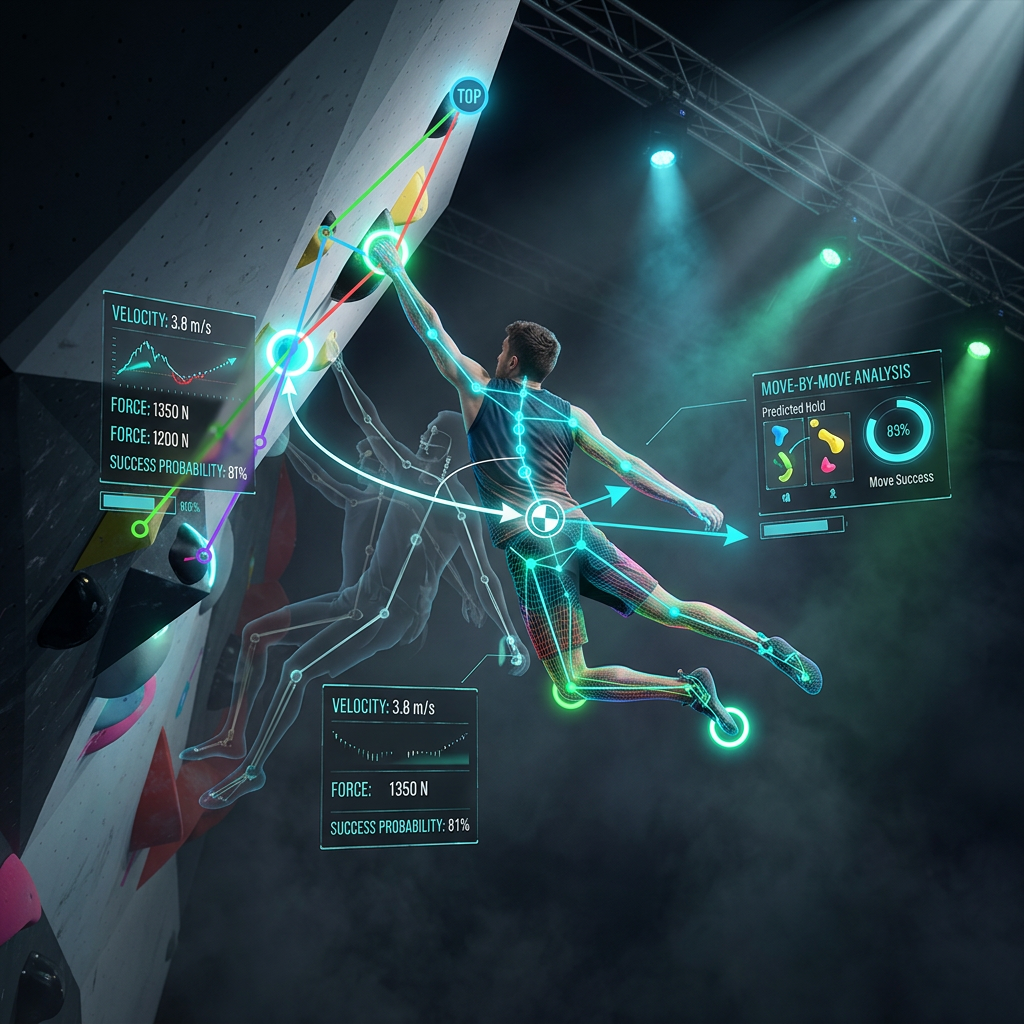
Raw sensor data is fed into our machine learning engine, which transforms it into athlete feedback that is visual, intuitive, and immediately actionable. Skeletal overlays, joint movement arcs, and full-body wire meshes reveal what the eye cannot — giving coaches and athletes a shared language for movement.
Skeletal & Joint Visualization
Every session generates a mapped skeletal model of the climber — tracking joint angles, limb positions, and body tension through every move.
Full-Body Wire Mesh Overlay
A complete three-dimensional mesh is reconstructed over the climber, exposing subtle postural inefficiencies invisible to the naked eye.
Orbital Frame Review
Coaches can orbit around any captured moment in a session — reviewing a single frame from any angle to pinpoint exact technique errors.
Session-Over-Session Comparison
Visual overlays compare movement patterns across sessions — making progress and regression measurable and visible, not just felt.
Hold Intelligence & Heat Mapping
Every Hold. Mapped. Measured.
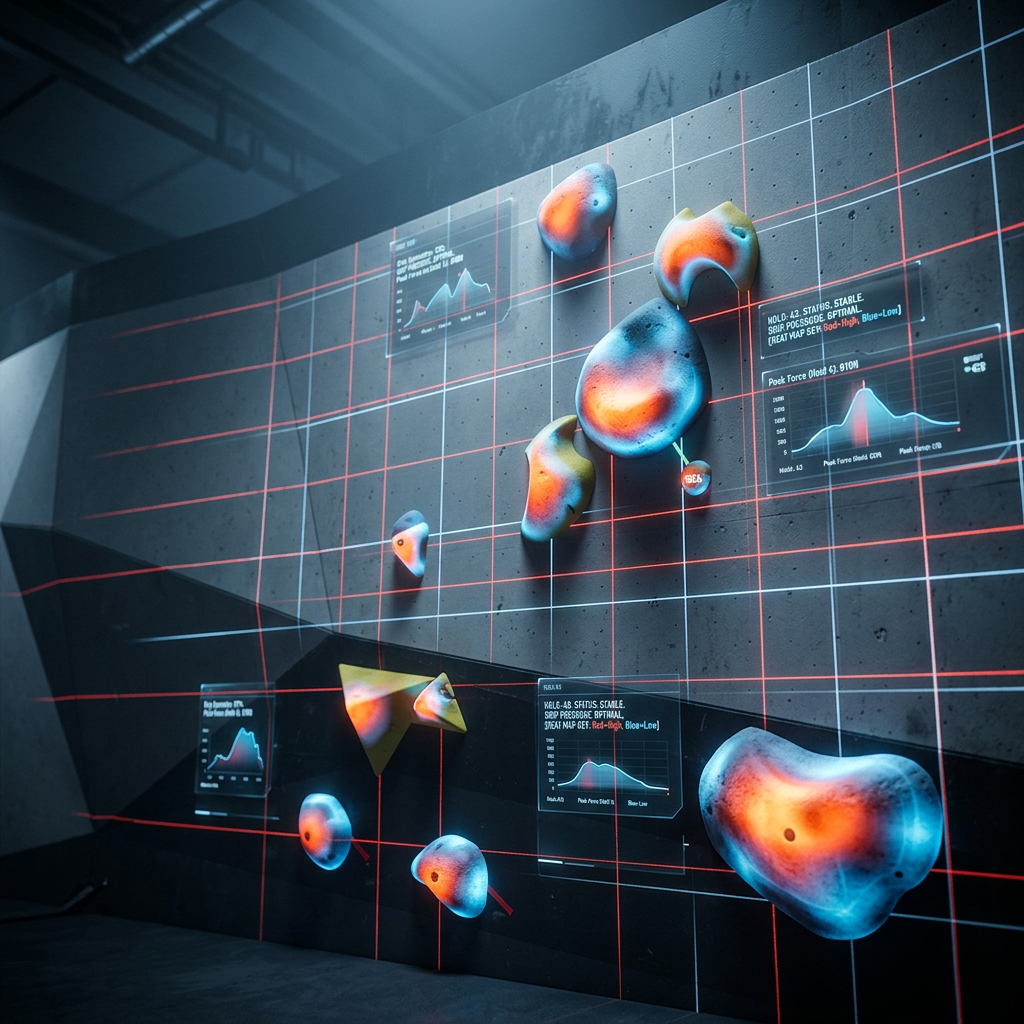
The wall is not just a surface — it is a data layer. Every hold is continuously monitored, with contact frequency, grip pressure distribution, and usage patterns rendered as live heat maps. Coaches can see exactly where athletes are loading, labouring, and leaving performance on the table.
Hold Sweet Spot Heat Mapping
Contact patterns on every hold are visualised as heat overlays — showing exactly where grip force is concentrated and where efficiency is being lost.
Load Sensor Integration
Sensors embedded in the wall structure measure impact forces and load distribution. Floor-level cameras are mounted on a dedicated bar positioned in front of the pads — keeping the landing zone completely clear.
Fall Detection & Impact Logging
Every fall is detected and logged — impact force, fall distance, and landing zone recorded as part of the athlete's session data.
Fatigue Pattern Recognition
Changes in hold usage and grip distribution across a session reveal the onset of fatigue before the climber consciously registers it.
Beta Sequence Engine
The Optimal Path. Generated.
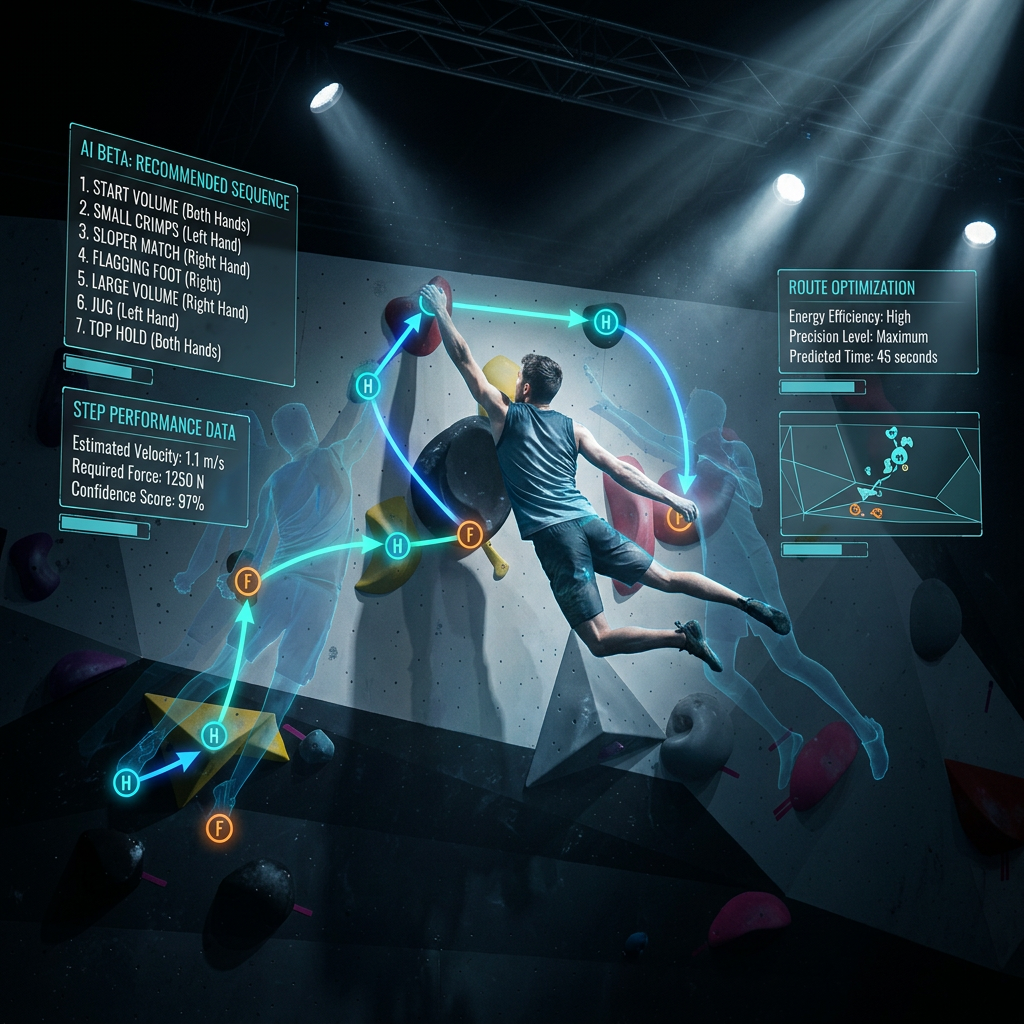
Our AI does not just record what you did — it generates what you should do next. Beta movement sequence pathways are computed from the full sensor model and delivered as visual overlays on the wall or through a guided HUD — showing climbers the optimal line through any problem before they leave the ground.
AI-Generated Beta Pathways
The system computes the most efficient movement sequence through any route — mapping foot placements, hand sequences, and body positions as a visual pathway.
HUD Guidance System
Beta can be delivered through a heads-up display — driving lines and movement cues that guide a climber through complex sequences in real time.
Personalised to Your Profile
Pathways are generated based on the individual's body dimensions, movement tendencies, and strength profile — not a generic template.
Projected Wall Overlays
For coaching and review, beta sequences can be projected directly onto the wall surface — turning the wall into an interactive movement canvas.
Route Intelligence
Every Route. Digitally Understood.
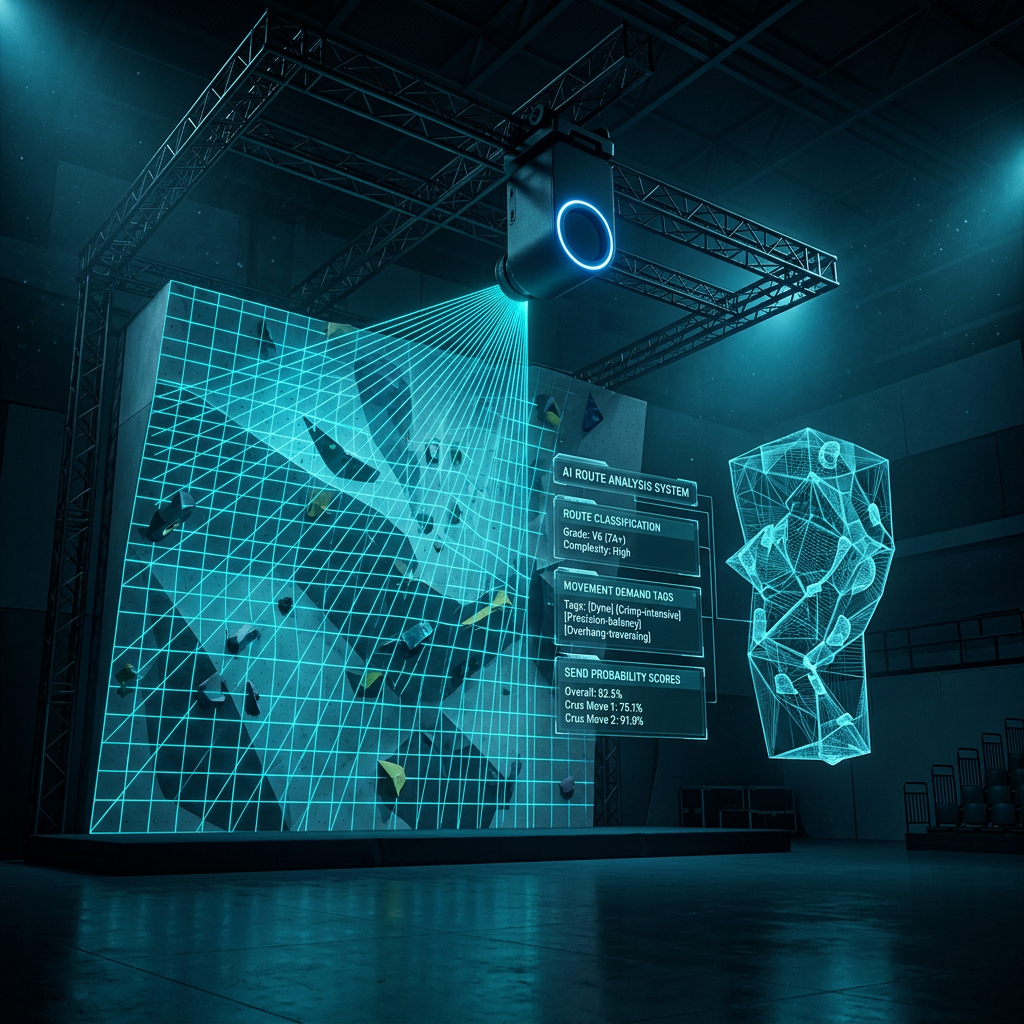
The moment a new route is set, the system scans it completely — building a full digital model of the problem. Movement demands, energy system requirements, and risk profiles are computed and stored before a single climber touches the wall.
Instant Route Scanning
Every new route is digitally captured on setting — hold positions, panel angles, and reach geometry logged into the athlete database automatically.
Movement Demand Classification
Routes are profiled by energy system and movement type — power, contact strength, endurance, or technical precision — informing training programming decisions.
Send Probability Score
A personalised probability score is generated for each route based on the athlete's movement profile, current strengths, and identified weaknesses.
Risk & Injury Flag System
Routes containing move types associated with elevated injury risk for a specific athlete are flagged before they attempt them.
The Live Performance World
A Video Game World. Inside the Gym.
Everything in the facility is measured, frame by frame, in real time. Athlete positions, forces, falls, holds, and movements are stitched together into a live digital model of the gym — a video game-like world where every variable is tracked, every session is stored, and the full picture of athletic development is always visible.
Frame-by-Frame World Model
The entire gym is reconstructed digitally in real time — every climber, every hold, every surface tracked simultaneously as a living data environment.
Athlete Identity Tracking
Each athlete is individually identified within the system — their session data, movement history, and performance trends building into a continuously updated profile.
Force & Impact Measurement
Load sensors throughout the wall structure capture the full physics of every session. A dedicated camera bar mounted in front of the pads provides unobstructed floor-level capture — forces, impacts, and landing data quantified and stored.
Coaching Intelligence Layer
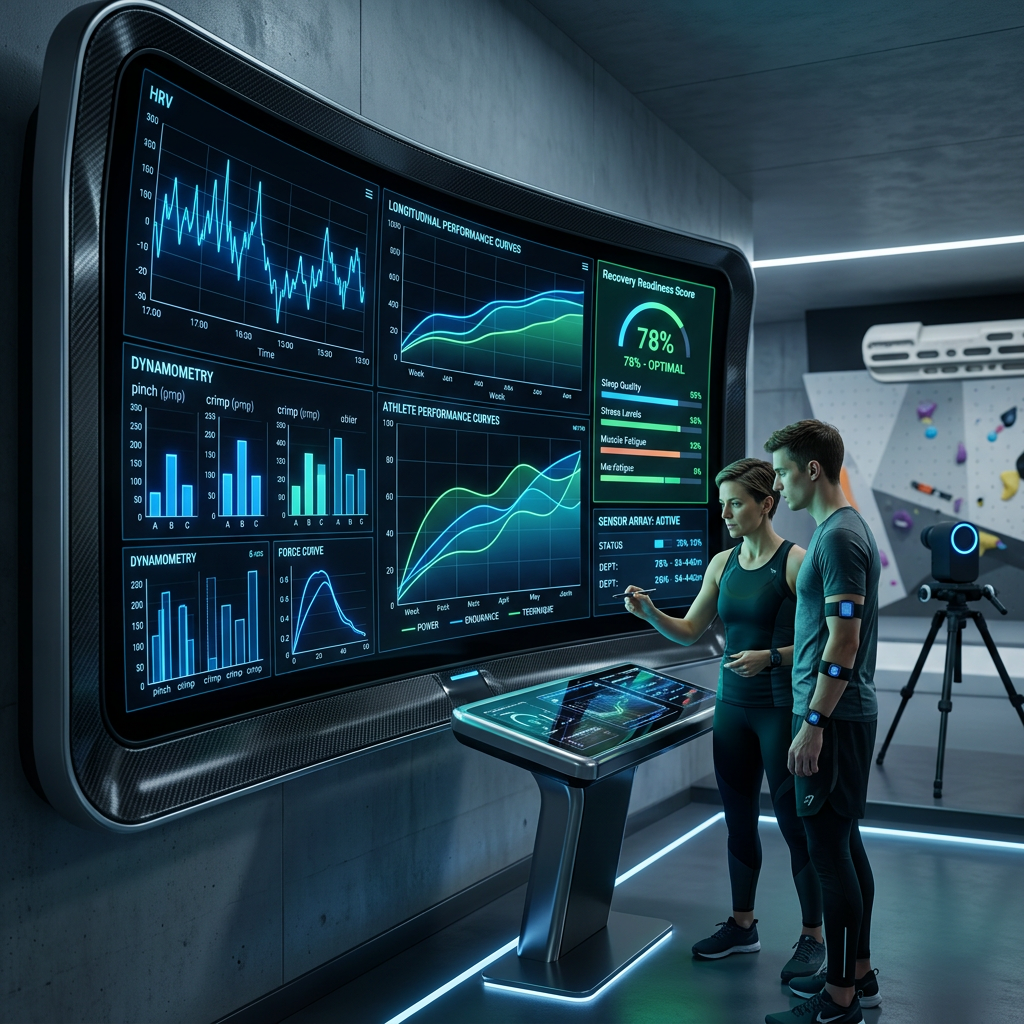
Coaches access a unified view of all athletes in session simultaneously — real-time flags, movement alerts, and performance summaries without interrupting the climb.